Baby Teething: What Baby Teeth Come In First?
When your child begins teething, what can you expect? For starters, know that on average, teeth erupt between 6 and 7 months of age. A good rule of thumb is the rule of 4s: You can expect about four teeth every four months starting around seven months of age. There are 20 baby teeth total, and they’re usually all present by two-and-a-half years of age.
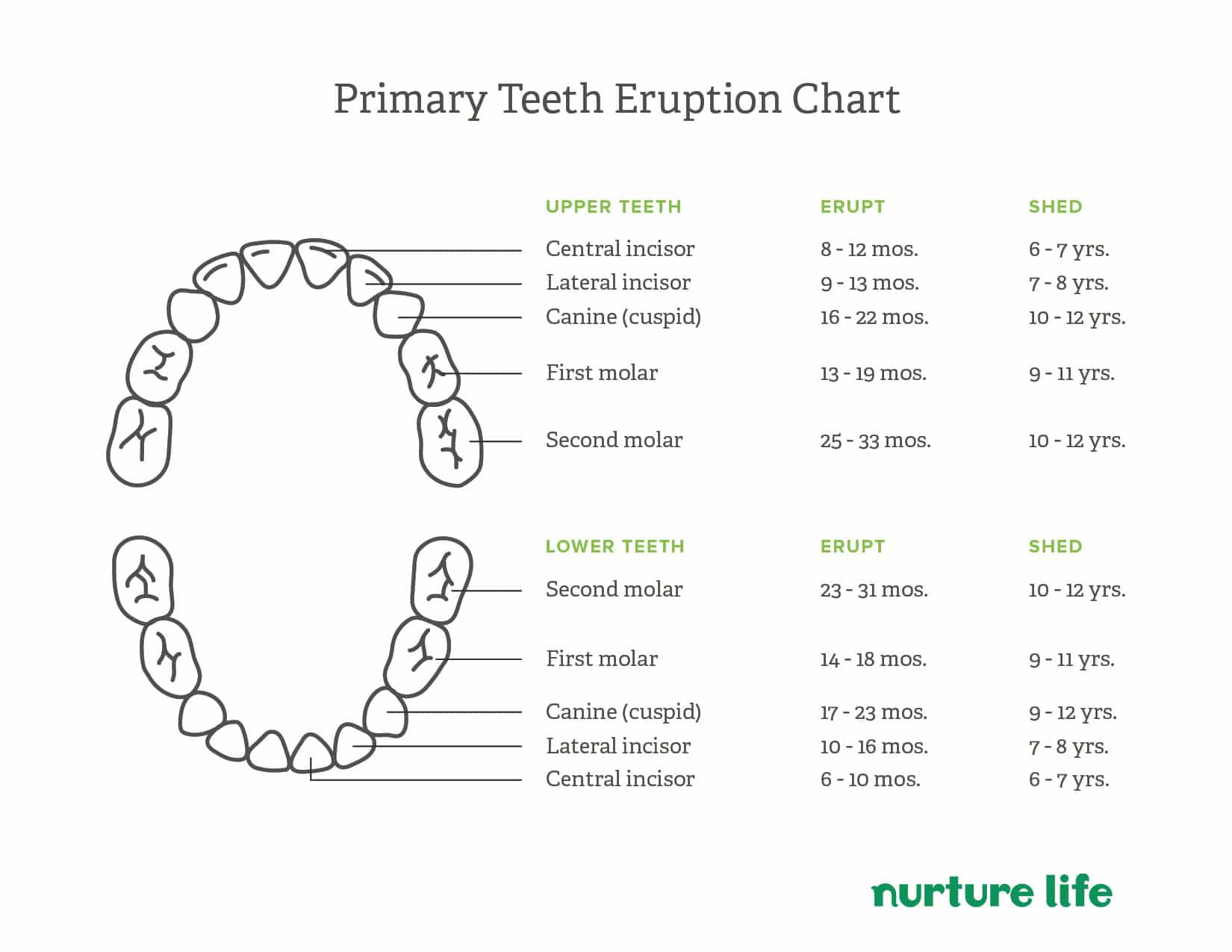
Some babies start teething as early as three months or as late as 15 months. This is considered normal and can be attributed to genetics.
When your baby begins to eat real food, challenges may arise, especially if they’re teething. Many times, parents confuse teething pain with a lack of interest in food. Your baby is also forming new skills with self-feeding, which can be frustrating for them. This is a great time to introduce teethers. Some babies are comforted by the texture and cold feel of teethers.
When feeding your baby, take your time in determining if your baby will more readily accept purees or soups. Also, try offering healthy popsicles or frozen foods in a silicone or mesh feeder, like the Boon PULP Silicone Teething Feeder or the Munchkin Deluxe Fresh Food Feeder. Cubed mango, seedless watermelon, or mixed vegetables are all good choices, and the cool temperature will soothe their gums and teeth.
Signs and Symptoms of Teething
Different babies exhibit different signs of teething. You might see a low-grade fever (less than 101°F), excessive drooling, and an increased interest in putting objects or fingers in their mouth. Since drooling can cause rashes on the face, neck, or upper chest area, try having your baby wear a cloth bib as they’re teething. Pat their cheeks and chin dry, then apply a thin layer of healing ointment (such as Aquaphor), to help soothe the rash and prevent further irritation. Excessive drool can also cause loose stools. Use diaper cream to protect your baby’s bottom from diaper rash and irritation.
According to the American Academy of Pediatrics, if you have an infant younger than four months old with a rectal temperature of 100.4°F or above, you should immediately call your pediatrician or go to an emergency room. This could be a sign of a potentially life-threatening infection.
When Should I See a Pediatrician or Dentist?
The American Academy of Pediatric Dentistry recommends that your child’s first dental visit occur when their first tooth erupts or at age one, whichever comes first. The purpose of the first visit is to give you an opportunity to establish a relationship with your child’s dentist in case there’s ever an emergency. This visit also allows the dentist to review healthy eating guidelines and home-care recommendations, discuss oral habits, and evaluate the growth and development of your child. It’s a great time to ask questions related to baby teething and find out what to expect in the coming months.
For more information about Dr. Reena’s work at Growing Smiles, please visit the Growing Smiles website.
FAQ
What causes sore gums during infant teething?
Sore gums happen because baby teeth push up through the gums as part of the natural teething process. As the teeth begin to emerge, pressure builds in the baby’s gums, which can lead to swollen gums, tender gums, and gum pain. This mouth pain is common during teething and is a normal sign that primary teeth are developing.
How can parents help soothe a baby’s gums when teeth start coming in?
Parents can help by offering safe teething toys, teething rings made of firm rubber or solid rubber, and by gently rubbing the baby’s gums with a clean finger. These methods encourage a baby to chew, which can relieve sore or tender gums and help keep the baby comfortable during teething.
When do babies start teething, and what is considered normal?
Teething usually starts between 6 and 7 months of age, but some babies start teething earlier or later. This range is normal and often influenced by genetics. Teething start times vary, and both early and late teeth appear without affecting a child’s health.
What are the safest ways for safely soothing teething pain at home?
To treat teething pain. You can use methods that include using clean teething rings, a soft-bristled toothbrush, chilled teething rings, and gentle pressure on the gums. The Food and Drug Administration warns against teething necklaces and certain teething tablets due to serious risks. Parents should focus on simple teething remedies that do not involve medication unless advised by a pediatrician.
Which primary teeth usually appear first?
The lower central incisors are usually the first primary teeth to appear, followed by the upper central incisors. These baby teeth are part of the set of deciduous teeth, and other teeth will continue to emerge over time.
What should parents expect when their baby’s first tooth erupts?
When a baby’s first tooth comes in, parents may notice sore gums, increased drooling, and mild teething pain. The baby may chew more on toys or objects and may seem cranky. These signs are temporary and usually improve as the tooth fully breaks through the gums.
How does infant teething affect feeding and comfort?
Teething for infants can affect feeding because sore gums and mouth pain may lead to trouble eating or a short-term decrease in appetite. Some teething babies have difficulty eating solids during this phase. Keeping textures soft and focusing on comfort can help until the baby feels better.
How can you tell when a baby is about to start teething?
Signs that a baby is about to start teething include drooling more than usual, swollen gums, the baby chews on hands or toys, and changes in sleep, such as difficulty sleeping. These teething symptoms often appear shortly before teeth begin to emerge.
What changes happen in a baby’s gums as primary teeth develop?
As primary teeth develop, the baby’s gums may look red, swollen, or slightly raised where teeth will appear. You may be able to feel ridges under the gums as teeth begin to form in the baby’s mouth. These changes are part of the normal teething process.
Is discomfort different when a baby’s first tooth comes in compared to later teeth?
Discomfort can feel stronger with the first healthy tooth because it is a new sensation for the baby. As more baby teeth come in, some babies adjust better, even though multiple teeth may emerge at once. Each teething baby responds differently, but the overall process remains a normal part of early life.
What should I do if my child is acting cranky and showing teething symptoms, especially when the upper teeth start to come in?
If your child is acting cranky when teething symptoms appear, it helps to remember that this is a natural process as teeth emerge through the gums. When teeth emerge, especially as the teeth start to push through and the central incisors develop, pressure can build until the teeth break the surface. This can make a child want to chew more often, so offering safe teething rings is helpful. Teething rings give your child something appropriate to chew, instead of plastic objects that are not designed for the baby’s mouth. A clean teether can be offered several times a day so your child can chew comfortably as teeth emerge.