
 At Nurture Life, we believe great food works best when it’s paired with the right tools. That’s why we partnered with ezpz, a brand trusted by feeding experts, to support your child’s development as they learn to self-feed. With nutritionally balanced, ready-to-enjoy meals from Nurture Life, served alongside thoughtfully designed ezpz feeding essentials, your little one will have everything they need to become a successful self-feeder in no time.
Together, we’re here to make this transition easier, less stressful, and more joyful—so you can focus on watching your child learn, explore, and grow at the table.

How can I set my baby up for self-feeding success?
As your baby grows, mealtime becomes about more than just eating—it’s about learning new skills. This stage introduces soft Finger Foods that encourage chewing, oral-motor development, sensory exploration, and early self-feeding skills. With the right tools and textures, you and your baby will build confidence and independence one bite at a time.
A baby-led weaning approach is when babies feed themselves independently instead of being fed by an adult. Baby-led means that the baby controls their experiences and the adult follows their lead by trusting the baby to know whether to eat, what to eat, how much and how quickly. The baby will place the hand-held food (or a preloaded utensil) into their mouth independently. This is beneficial because it:
- Allows baby to lead the way honors intuitive eating skills from the start.
- Promotes a healthier relationship with food, which can decrease picky eating tendencies and texture aversions later on.
Simple plating can make a big difference. Using a stable, suctioned mat, such as the ezpz Mini Mat, helps keep food in place and your little one comfortably centered, which supports safer swallowing and easier self-feeding. Low edges and divided sections make it easier for babies to see, scoop, grab, and explore their food with confidence. The built-in portions also take the guesswork out of serving sizes, making it easy to offer a balanced mix of protein, veggies, grains, and healthy fats—just the right amount to support growing bodies and new skills.
Parent Tip: Let your child lead. Start with small portions, refill as needed, and give baby space to practice self-feeding at their own pace.
What does “balanced nutrition” mean for babies?
At Nurture Life, we believe in balanced nutrition for babies which is why every meal in our Baby-Led Weaning Bundle has…
- Protein, a food for growth. Protein-rich foods = iron-rich foods. Iron supports neurological development and immune function. Each of the meals in our baby-led weaning bundle contain protein from animal sources, which means higher efficiency absorption of iron.
- Vegetables, a food to get familiar with. Early exposure to a variety of veggies and flavors can shape food preferences early on. Simply put, what you feed your little one today can shape what they eat as an adult. In addition, vegetables contain vitamins that support babies’ immature immune system and improve iron absorption. Every meal in our baby-led weaning bundle contains at least one full serving of veggies.
- Grains, a food for energy. Carbohydrates fuel growth, brain development, and all that movement. Each meal includes a bite-sized source—like pasta or starchy vegetables—to provide steady energy and keep little ones satisfied.
- Healthy fat, a food for development. Healthy fat sources like salmon, olive, and avocado oil, support brain growth and the development of the nervous and cardiovascular systems, while also helping babies absorb key nutrients. Each meal includes a source of nourishing fat to support your baby’s growth and development.
Just as important as what each meal includes is what we limit. Every meal in our baby-led weaning bundle is thoughtfully designed with no more than 150 mg of sodium, zero grams of added sugar, and no chemical preservatives or harmful additives.
How do I know when my baby is ready to self-feed?
The baby feeding timeline: Feeding Grasps and Utensils
- Palmar grasp (at 6 months): when a baby starts solids, they begin to develop the “palmar grasp.” This grasp is when a baby picks up objects by folding four fingers into their palm.
- Pincer grasp (around 9 months): baby can pick up small pieces of food between their index finger and thumb. Offering soft, squishable foods this size at this stage will promote development of this skill.
- Utensils (around 12 months): By age one, baby has solid self-feeding skills with their hands and is ready for scooping and piercing with utensils.
Your baby may be ready for Finger Foods when…
- They reach for food, bringing hands to mouth (able to self-feed with palmar grasp).
- They are able to maintain an upright posture and are learning their hunger and fullness cues.
- They are able to perform a ‘munch chew’ (mash food with their gums- no teeth are required).
Note: As your baby explores finger foods and utensils, some normal gagging may occur. This is common for babies since their gag reflex is more forward in their mouth. Knowing the difference between gagging and choking will help you feel more comfortable and confident during mealtime
Parent Tip: Offering your child a variety of textures and temperatures can help with gagging episodes. For a textured puree, try adding 3 Tbsp. water before heating your jar of Finger Foods, then puree or mash and always test temperature before serving.
Remember these 2 things:
- Real Food, real learning. Nutrition still comes primarily from breast milk or formula until age 1, while solid foods help babies learn how to chew, swallow, self-feed, and explore new flavors and textures. You may notice a natural shift in the amount of milk your baby consumes around age one as they begin to eat more solid foods.
- Keep trying! Don’t stop offering foods they don’t love yet. Repeated exposure helps build healthy, confident eaters over time.
Parent Tip: Take the pressure off. Messy, imperfect meals are how skills (and confidence) grow.
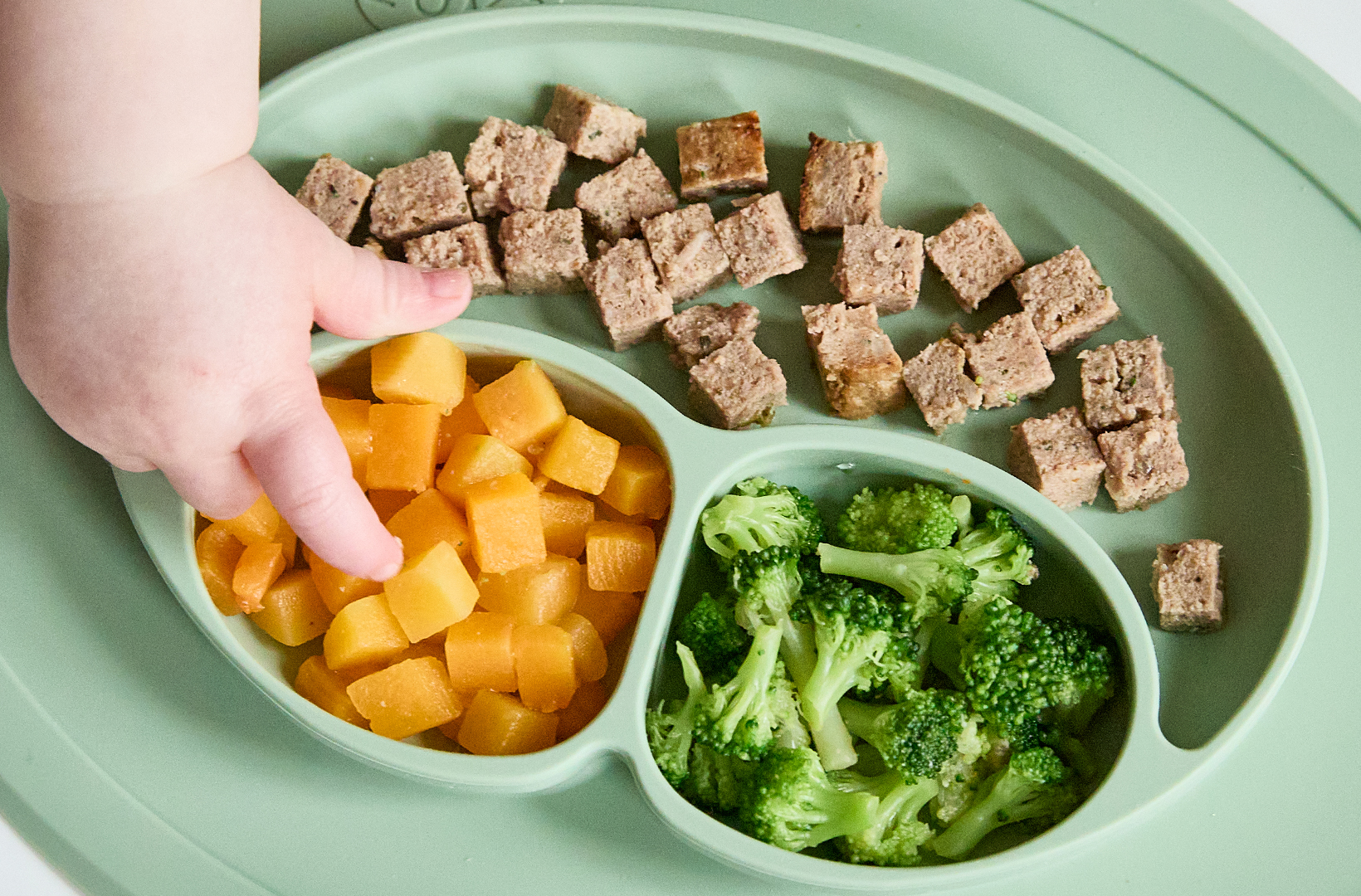
When should I introduce utensils to my baby?
Scooping and piercing skills start to develop between 10-15 months, as their wrist rotation and fine motor skills begin to develop. Early spoon practice helps build coordination and confidence, especially when food stays put and self-feeding feels successful. Sensory bumps on the spoon bowl help guide the lips to the right position while also decreasing gagging commonly associated with utensil use. Strong lip closure supports mature swallowing patterns, reduces food loss from the mouth and encourages little ones to keep trying (instead of giving up and using their fingers!).
Around 12 months, once scooping is going well, it’s time to introduce a fork. Start by modeling how to spear soft foods and offer lots of low-pressure practice. These small, everyday moments help build independence and confidence at the table.
Parent Tip: Start simple and focus on exploration. Preload spoons or forks as needed, offer easy-to-spear foods like soft fruit or pasta, and remember—practice (not perfection) is how healthy eating skills grow.
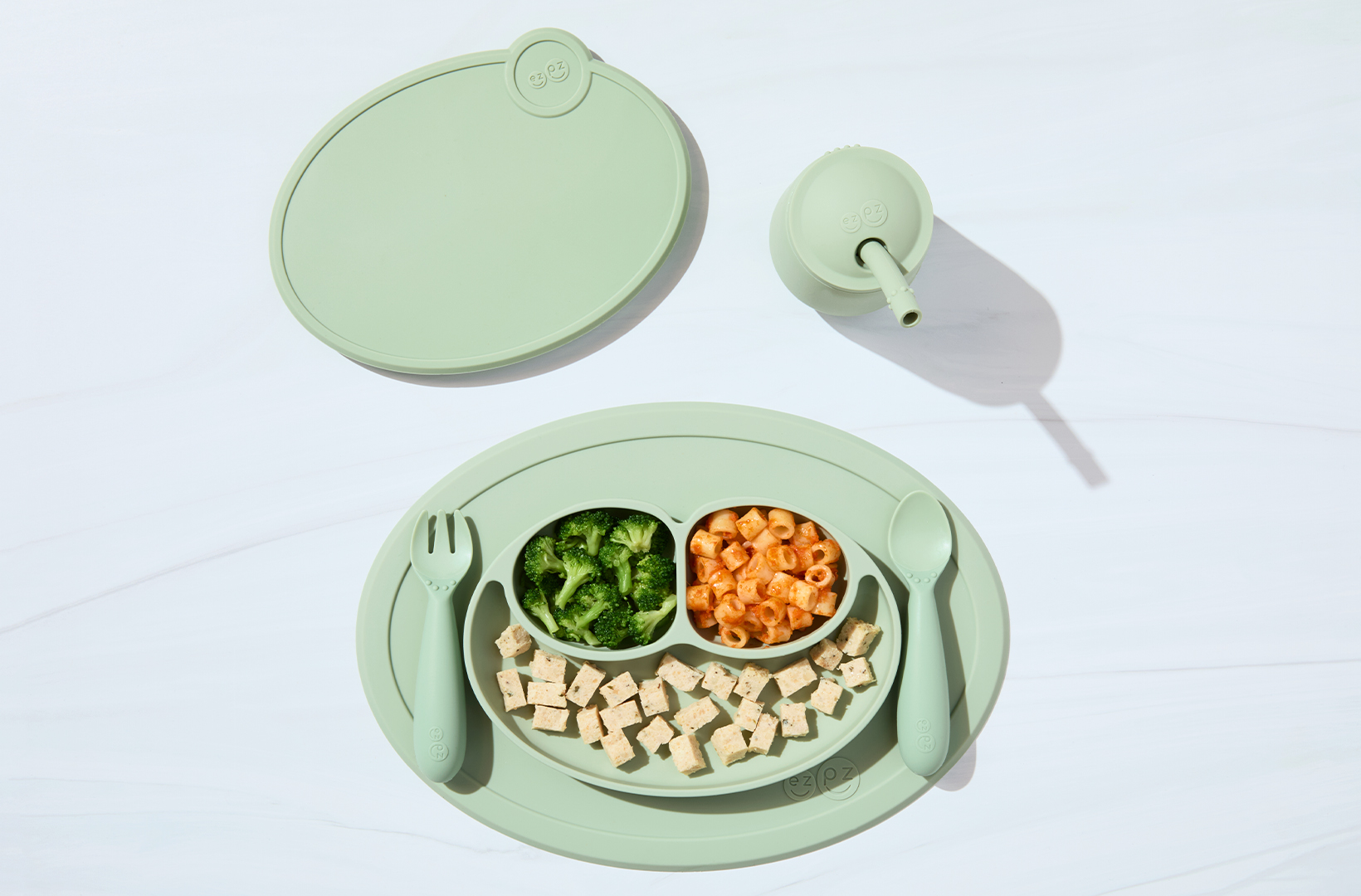
- Mini Mat + Lid: Smile Design encourages a 😀 mealtime experience + suction base reduces tipped plates + helps littles practice their feeding skills
- Mini Spoon: Silicone handle provides a non-slip grip to help with scoping
- Mini Fork: Silicone handle provides a non-slip grip to help safe piercing
- Mini Cup + Straw Training System: provides an open cup, training straw and advanced straw to help practice drinking skills
What about Cups & Straws for Babies?
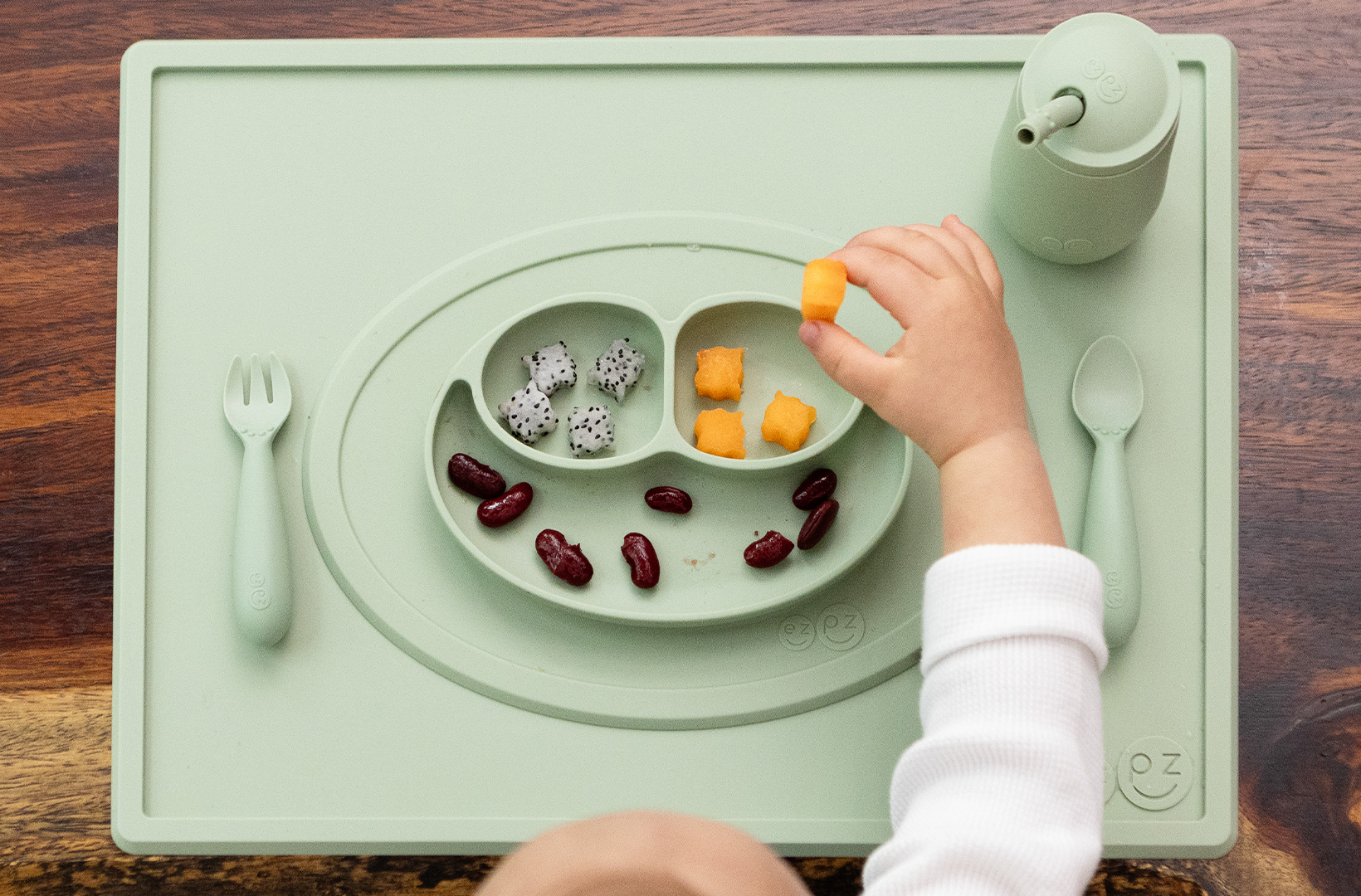
Learning to drink from an open cup and a straw are important milestones supporting oral skills, swallowing, and early speech development. Around 9 months is a great time to practice independent open cup drinking as well as straw drinking from a training straw. A small, easy-to-hold cup helps reduce spills while your baby learns, and a beginner straw can support successful sipping as coordination improves.
As your baby/toddler grows more confident, you can progress to a more traditional straw. This gradual approach helps build stronger drinking skills and supports a smooth transition from training tools to everyday cups.
Parent Tip: Start slow and expect spills—it’s all part of learning. Offer a variety of liquids (breast milk, formula, smoothies, bone broth, purees and water) during meals and let your child practice at their own pace.