
Babies take in everything around them: seeing, hearing, touching, smelling, and of course, tasting! As your little one develops, so do their feeding skills. Once they are eating Stage 2 purees with ease and show interest in feeding themselves, it may be time to introduce more filling foods for them to pick up and try themselves.
See our FAQs below to understand all your Stage 3 finger food questions: when, how, and what to start introducing to your baby. It can be a messy process with little pieces of food thrown all over the floor, but trust us—it’s worth it to help your baby develop into a healthy little eater!
What are Finger Foods?
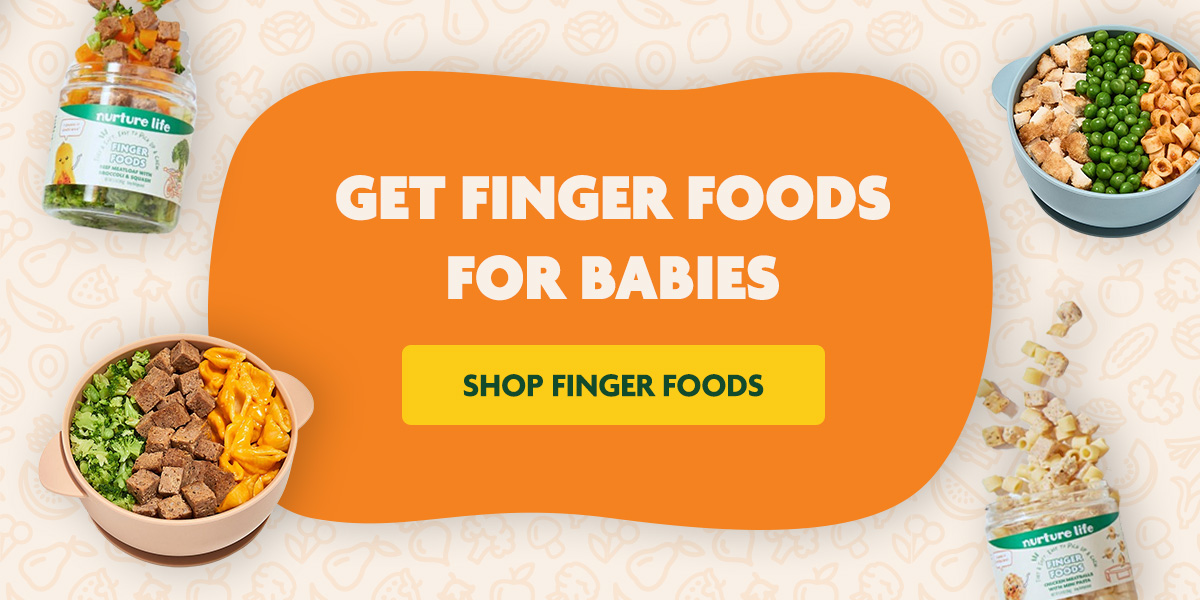
Following Stage 2 combination purees, finger foods are the next stage in your baby’s eating adventures. Finger foods consist of bite-size pieces that are small enough to prevent choking, big enough to pick up with tiny fingers, and soft enough not to require teeth. Other names for finger foods include Stage 3 foods or pick-up foods.
Why are Finger Foods Important?
Finger foods mark the critical transition between purees and table food, where your baby can start to develop self-feeding skills. Giving your baby bite-sized pieces allows them to practice their pincer grasp, which is the coordination between the index finger and thumb to hold an item. Developing their pincer grasp is an important milestone for babies, and giving them properly sized finger foods helps aid this process.
This is also an important time for your baby to gain exposure to new foods. As you introduce ingredients, you’re helping prepare them for more food and less breast milk or formula in the next couple of months.
When is Your Baby Ready for Finger Foods?
It’s important to recognize when your baby is ready to explore finger foods, as this stage requires advanced motor skills and encourages food experimentation and independence.
Your baby may be ready for finger foods when…
- They reach for food (most commonly a parent’s dish or serving utensil).
- They are hungry soon after meals. (Purees are less calorie-dense and filling, so they may not be getting enough to eat!)
- They are eating their purees quickly and continue wanting more.
- They are able (or almost able) to hold small pieces of food between their fingers.
If your baby is exhibiting a few or all of these signs, consider introducing finger foods! But if they aren’t ready, don’t fret. They’re still getting all of the nutrition they need from breast milk or formula up until age one, when they transition to cow’s milk.
Every child develops at a different pace. Just continue paying attention to your baby’s habits, and ease into finger foods when they’re ready.
What are the Best Finger Foods to Start Your Baby On?
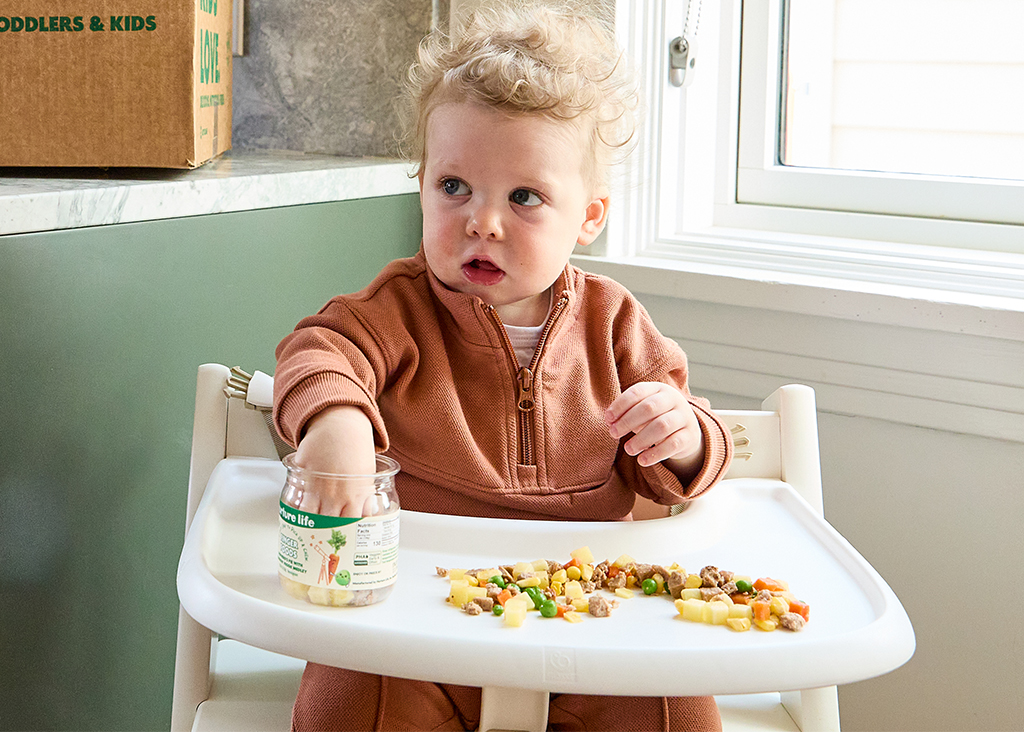
Once your baby is ready to make the transition, you’ll want to find the best finger foods for your baby to try. We recommend starting with small squares of soft, squishy foods. Before serving, test that the food can be easily pierced with a fork to ensure your baby won’t have trouble mashing it in their mouth. Think cubes of boiled sweet potatoes, carrots, soft proteins like meatballs or tofu, bananas, ripe avocados, or well-cooked tiny pasta (like ditalini!).
Once your baby has mastered mashing cubed pieces of these squishy foods in their mouths, try introducing smaller soft foods such as peas or well-cooked beans like black beans or white beans. These less “mushy” foods will exercise your baby’s grasping and handling skills.
Can I Start Introducing Spices and Herbs to My Baby?
Absolutely. In fact, we encourage it! Stage 3 is a period of palate development, and introducing spices and herbs allows them to get used to these flavors early on. Try starting with milder flavors, like a bit of cinnamon or basil, and work your way up to more complex flavors like curry or paprika.
What Foods Should You Not Give to Babies?
It is important to avoid foods that are too hard or large, making them difficult to swallow. In order to prevent choking, raw carrots, fresh bell peppers, and other hard, raw veggies and tough meats should be avoided until chewing abilities are fully developed.
Also, focus on not only the size, but also the shape of the foods that you introduce. For example, grapes, cherry tomatoes, and other rounded foods are dangerous choking hazards for children just learning to eat finger foods. Introduce these later (18–24 months) when your child has started developing more teeth, and even then, consider cutting circular foods into smaller pieces to create a more favorable shape for chewing.
Do Babies Need Teeth to Chew Finger Foods?
No! Babies rarely “chew” with their front teeth. They use their palate and gums to mash foods during these early stages. Teeth will start to emerge, but they won’t be used for true chewing until their 2-year molars grow in.
When Can You Start Babies on Finger Foods?
Babies develop at different stages, so there is no right or wrong when it comes to starting finger foods. If your baby shows signs of readiness, such as grabbing your food or getting hungry soon after finishing purees, consider giving finger foods a try, especially softer options such as ripe avocado or banana! Your baby may be gung-ho one day and disinterested the next. This is normal, so don’t be concerned if there is a range of motivation day-to-day.
If Your Baby is Not Fully Ready, Can You Switch Between Purees and Finger Foods?
Yes! It’s perfectly normal to ease into the transition by alternating between purees and finger foods. This gives your baby the opportunity to start playing with the idea of self-feeding, even if they’re still having trouble with some of the execution. As you alternate, just continue offering different finger foods and giving your baby the option to pick up bites themselves.
Stage 3 finger foods are the next step in your growing baby’s developing diet. Try our suggestions to make a successful transition into this fun stage, and remember to enjoy the process with your little independent eater!
If you have any questions, we’re happy to help! Just reach out to us at support@nurturelife.com.
FAQ: Transitioning Your Baby to Finger Foods
1. When to start finger foods?
You can start introducing finger foods when your baby shows signs of readiness, typically around 6-8 months. Signs include reaching for food, getting hungry soon after meals, or eating purees quickly and wanting more. Every baby develops at their own pace, so look for these signs and consider introducing finger foods when your baby is ready.
2. Why are finger foods important for my baby’s diet?
Finger foods help your baby transition from purees to solid foods, aiding in the development of fine motor skills, especially the pincer grasp. This stage also allows your baby to explore new textures and foods, preparing them for less reliance on breast milk and formula.
3. Do babies need teeth to chew finger foods?
No, babies don’t need teeth to chew finger foods. At this stage, they use their gums to mash foods like soft cubes and mashed potatoes. Teeth will develop gradually, but babies can manage finger foods with their gums, making this a great time to introduce soft foods.
4. Can I mix spoon feeding and finger foods?
Yes, it’s completely fine to alternate between spoon feeding and finger foods. This allows your baby to practice self-feeding at their own pace while still getting some meals through spoon feeding, easing the transition to more solid foods.
5. What are the best finger foods for babies to start with?
Start with small pieces of soft foods, such as well-cooked vegetables or ripe bananas. These finger foods are easy to handle and can help your baby develop the necessary skills for self-feeding. Gradually move to more textured foods like small bites of pasta or soft proteins once they’ve mastered basic finger foods.
6. How do I know if my baby is ready for finger foods?
Your baby may be ready for finger foods if they’re showing signs like reaching for food, getting hungry soon after meals, or eating purees quickly and wanting more. Babies usually exhibit interest in solid foods around 6-8 months, but each baby develops at their own pace.
7. Should I avoid certain foods to prevent choking hazards?
Yes, always be cautious of choking hazards when introducing finger foods. Avoid giving your baby hard or large pieces of food, such as raw carrots, grapes, or hot dogs. Make sure foods are cut into small pieces and are soft enough to mash with gums.
8. Can my baby eat finger foods without teeth?
Yes, your baby doesn’t need teeth to eat finger foods. They use their gums to break down soft foods like sweet potatoes or mashed potatoes. As your baby’s teeth begin to emerge, they will gradually transition to chewing more solid foods.