If you’re in the Google-frenzied days of young parenthood, you’ve likely come across the phrase “baby-led weaning” at some point in your late-night internet searching. You may have stumbled upon it on social media or even have friends who swear by it. But what is baby-led weaning, exactly? And more importantly, is it the right choice for your little one?
What Is Baby-Led Weaning?
Baby-led weaning, often written as BLW, is a method of introducing your baby to solid food. It differs from conventional baby food stages in two important ways:
- Progression: Instead of starting with Stage 1 single-ingredient purees and then moving to Stage 2 combination purees, BLW skips purees altogether and goes straight to whole foods as soon as your baby is developmentally ready. In this case, whole foods mean soft, mushable chunks of solid food that your baby can pick up with their tiny hands.
- Independence: Instead of the parents maintaining control over mealtime, the baby gets to take the reins. (Hence the name “baby-led!”) Rather than being spoon-fed, your baby independently chooses which foods to pick up and how much to eat.
Why Do Some Parents Choose Baby-Led Weaning?
Baby-led weaning has gained popularity for a wide variety of reasons, from healthy development for baby to mealtime convenience for parents. Here are just a few of the benefits that make some parents choose BLW:
- BLW allows babies to experiment with bringing food to their mouths from a very young age. Daily practice develops and then reinforces motor skills, hand-eye coordination, and chewing muscles, all critical self-feeding abilities that may be hindered by too many smooth purees.
- BLW puts babies in charge of how much to eat. Instead of being spoon-fed an entire puree jar just for the sake of finishing it, your baby will learn to eat when hungry and stop when full. (With BLW, you don’t have to worry about overfeeding a baby. Babies are very good at knowing when they’re full, and you’re simply taking advantage of this instinctive ability.)
- BLW gives babies the opportunity to explore new tastes and textures, especially compared to standard store-bought purees. While purees tend to look and feel the same, finger foods allow babies to distinguish the many different textures, colors, shapes, and smells of whole, adult-like food, which will, in turn develop a more accepting palate and help prevent picky eating in toddlerhood and beyond.
- Although purees are often marketed for convenience, in reality, many parents find BLW to be even more convenient. Several studies and surveys have shown that BLW reduces stress at mealtime, as the parents are no longer responsible for constant feeding and the entire family can enjoy the same meal (with some age-appropriate alterations as needed to ensure safe finger foods for the baby.)
When Can You Start Baby-Led Weaning?
Most babies are developmentally ready to start BLW at around 6 months old. That is, their bodies are physically capable of grabbing, mushing, chewing, and swallowing chunks of real table food. However, some babies may take up to 10 months to be ready, and that’s perfectly normal, too.
Rather than age, the most important indicator of readiness to transition to finger foods is your baby’s developmental progress. Look for signs that include
- Ability to sit up in a highchair unassisted
- Trunk control (no more bobble head movements!)
- Ability to prop themselves up on their forearms
- Curiosity about table food
Keep in mind that even when your baby is ready for finger foods, that doesn’t mean that solids should totally replace liquids. Your baby should still be getting the majority of their nutrition from breast milk or formula until about 12 months of age.
What Are the Best First Finger Foods for BLW?
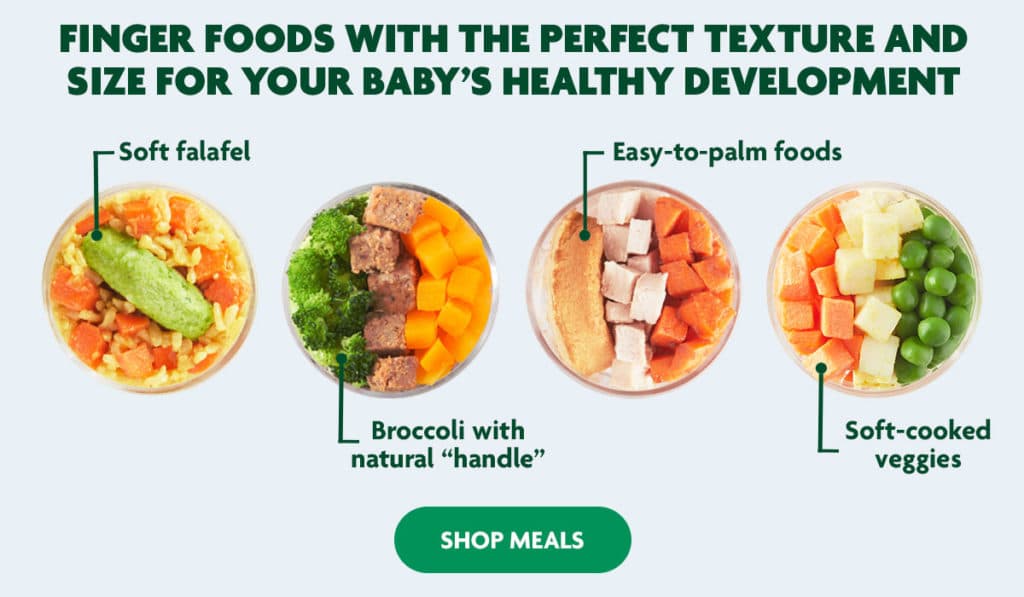
For BLW, texture is key. Your baby’s first finger foods should be soft, soft enough that you can smash the piece with no more than gentle pressure between your fingers. When you’re just starting out with baby-led weaning, try cutting foods into long strips. Since most babies under 8 months do not yet have the pincer grasp, they’ll need to pick up the food using their whole hand.
Try soft, easy-to-palm foods like these:
- Sweet potato, white potato, or butternut squash, cooked until soft and cut into long strips
- Soft-cooked veggies with natural “handles” like broccoli, carrots, or cauliflower
- Thin strips of soft bread, pancake, or French toast
- Naturally soft fruits like banana, mango, or melon
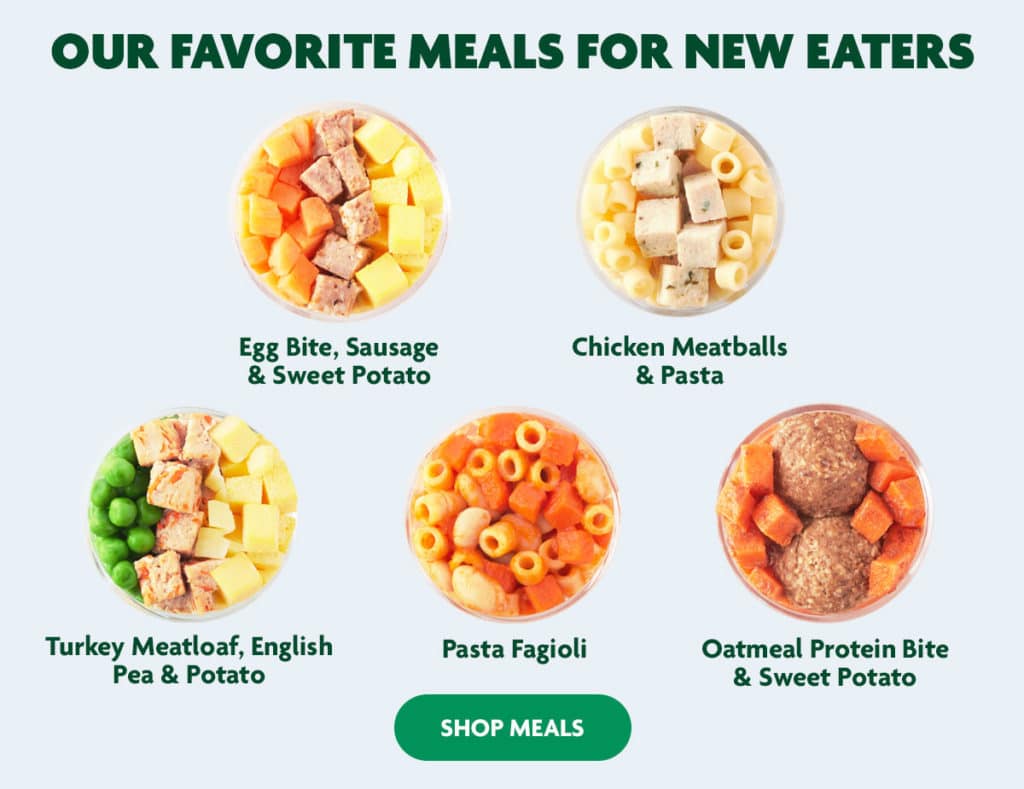
Once your baby has gotten used to picking up and eating solid foods, you can start cutting them into smaller pieces and even mixing ingredients together. Nurture Life’s Stage 3 baby food is a great way to introduce your baby to creative combinations of ingredients, all sized to encourage proper development and nutritionally balanced to help your baby grow up well.
What About Choking? Is Baby-Led Weaning Safe?
Choking is the biggest concern that parents express about baby-led weaning. While understandable, it’s not as serious a risk as many parents fear. Here are some tips to reduce the choking risk for your baby:
- Never leave your baby alone while they are eating.
- Make sure your baby eats only while sitting upright in their high chair (and that they can support their neck and head without assistance).
- Avoid circular foods like grapes, hot dogs, or blueberries, as well as raw vegetables in any size or shape. Particularly sticky foods (like nut butters) or hard fruits (like apples) are best avoided, too.
- Know the difference between choking and gagging. In the first few weeks of BLW, your baby may gag quite a bit. This is a completely normal physical response to food traveling too far in the back of their mouth. A baby who is gagging will look and sound as if they have a mild cough; a baby who is choking will look scared and make no noise.
Besides choking, food allergies are another potential safety risk with BLW. Be sure to start with single-ingredients and introduce only one new food to your baby at a time. Familiarize yourself with the Big 8 allergens, which are responsible for 90% of all food allergies in the United States. Speak with your pediatrician if your baby experiences any food reactions.
How Do You Start Baby-Led Weaning?
Every baby is different and will experience a different journey as they begin to eat real food. Stay flexible, have fun, and use these tips to help your transition to finger foods for baby-led weaning:
- Start one at a time. Put just one or two pieces of the same type of food in front of your baby so you don’t overwhelm them.
- Let them focus. To keep mealtime smooth and positive, introduce new foods only when your baby is alert and in a distraction-free environment.
- Slow down. Some babies accept finger foods right away, and some don’t! If your baby needs more time, try a slower transition by serving single-ingredient purees for some meals.
- Mix it up. There are no rules to “correct” baby-led weaning. It’s totally okay to let your baby explore independently for some meals and to spoon-feed purees for others.
- Forget utensils. At this very early stage, hands and fingers are the very best tools, giving your baby a chance to fully experience what they’re eating.
- Embrace the mess. Smashing, dropping, smearing, throwing—it’s all part of the learning process! Lay down some spare plastic bags or a washable splat mat to prevent a big cleanup.
- Don’t stress. If any aspect of infant feeding becomes too emotionally charged, your baby may develop negative associations with food. Be kind to yourself and take a break if and when the BLW journey becomes frustrating. You can always serve purees for now and try solid food again another day. The more fun and positive meals are, the better for your baby (and you!).
Should You Try Baby-Led Weaning?
There’s no right or wrong answer. There are endless ways to parent, and ultimately, the best choice for your family comes down to what works for you. Many child development experts are fans of the baby-led method, but plenty of babies move through the more conventional baby food stages and still develop perfectly happily and healthily. Give BLW a shot if you’re interested, but don’t feel guilty if you aren’t. You know what’s best for your family!
If you have any questions about baby-led weaning or how Nurture Life’s convenient and healthy baby food delivery can assist you in the BLW journey, we’d love to hear from you. Send our child nutrition experts a message to nutrition@nurturelife.com.
FAQ
What are the best baby-led weaning foods to start with?
The best baby-led weaning foods are soft foods that are easy to mash between your fingers and safe for a baby’s mouth. When starting solid foods, focus on simple, single-ingredient first foods such as steamed vegetables, ripe fruits, and iron rich food like shredded chicken or soft beans. These baby-led weaning foods support child nutrition while allowing babies to practice self-feeding and build fine motor skills.
How does baby-led weaning compare to traditional baby food?
Baby-led weaning differs from traditional weaning and traditional feeding because it skips spoon feeding purees and focuses on self-feeding from the start. Instead of relying mainly on jarred baby food, the baby-led weaning approach encourages babies to handle real food and control their own mouths while eating food.
When should you introduce solid food using baby-led weaning?
Most babies are ready to introduce solid food around six months, when infants begin sitting upright with good trunk control and have lost the tongue thrust reflex. At this stage, breast milk or formula remains the baby’s primary source of nutrition, and milk feeds should continue alongside complementary foods.
Is baby-led weaning feasible for busy families?
Many parents wonder if baby-led weaning feasible schedules fit into busy routines. In reality, baby-led weaning can simplify family mealtime because babies often eat the same meal as the rest of the household, with safe modifications. Preparing family foods instead of separate baby food can reduce stress and support a smoother weaning process.
How does baby-led weaning work in everyday meals?
Baby-led weaning styles work by integrating babies into the everyday eating of solids alongside the family. During family mealtime, babies can explore table foods in age-appropriate sizes and textures. The baby-led approach focuses on responsive self-feeding, allowing babies to decide how much to eat while parents decide what to offer food.
Can babies eat family foods, and how do you choose age-appropriate foods?
Yes, babies can eat family foods as long as they are modified into soft foods and cut appropriately. The key to practicing baby-led weaning is offering the same foods in a safe form, avoiding choking hazards like whole grapes, round foods, and thick spoonfuls of nut butter.
How should parents offer food and introduce new foods as first foods?
When you introduce solid food through baby-led introduction, start slowly. Offer food one item at a time and allow babies to explore it at their own pace. First foods should be simple and easy to handle, encouraging babies to learn self-feeding and strengthen fine motor skills.
Does baby-led feeding replace breast milk or formula?
No. During the early stages of baby-led feeding, breast milk or formula should remain your baby’s primary source of nutrition. Complementary feeding simply means adding complementary foods while continuing breast milk feeds. Most babies still drink only breast milk even as they begin eating solids and practicing self-feeding.
Can babies eat the same foods as the rest of the family?
Yes, babies can often eat the same foods served at family meals, as long as they are prepared safely. The baby-led approach encourages offering soft, manageable pieces so babies can develop chewing skills and oral motor skills while eating solids.
Is baby-led feeding safe, and does it increase obesity risk?
When babies practice feeding correctly, baby-led feeding is considered a safe feeding method for most families. Because babies control intake through self-feeding, this baby-led approach supports responsive feeding and may help regulate appetite. Some current nutrition reports suggest that responsive complementary feeding in early childhood may help lower obesity risk later on.